

UAE school leaders are encouraging students to turn to artificial intelligence for assistance with their studies, rather than as a replacement for engaging in the learning process, as tools such as ChatGPT become commonplace in homework activities. UAE school principals AI learning
Leaders of various institutions in the Emirates believe that the debate about the use of large-scale software in education is not about whether it should be allowed or not, but rather about how it can be used to aid the comprehension process, as opposed to generating content that can be handed in as assignments, which they believe is vital to encourage responsible use of the technology, rather than forbidding its use altogether.
According to David Williams, principal of the Regent International School, the best approach is not to ban the use of such technologies at school, due to its prevalence in students’ lives, while still teaching them how to interact with it “properly and responsibly,” which involves utilizing it for research, brainstorming, explaining difficult subjects and reviewing completed assignments, but not allowing it to replace a students’ own ideas, while teachers monitor their verbal explanations and classroom performances to ensure proper comprehension of the material.
At Woodlem Park School in Ajman, Principal Shiny Davison described a similar policy: students are pushed toward independent research and reliable sources, while using AI to generate or complete homework outright is not considered acceptable.
The school communicates its AI-use guidelines clearly to students, parents and staff, with teachers continually checking comprehension through questioning and classroom tasks. “AI may support learning, but it must never replace thinking,” Davison said.
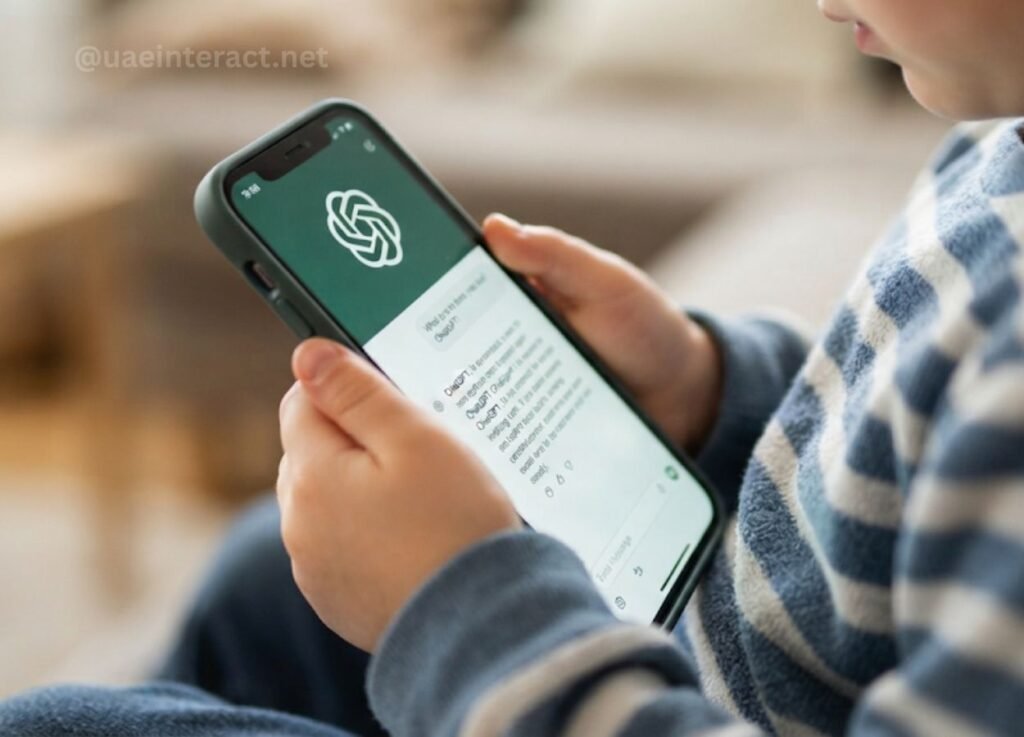
Real-world experiences illustrate both the benefits and the risks. Grade 7 student Yahiya Mohammed said ChatGPT helped him catch up on lessons missed during two weeks of travel, breaking down topics in simpler terms after classmates’ explanations weren’t enough.
Parent Amal Khalil said her son turns to AI when stuck on homework without an adult present, calling it “incredibly useful” — but warned that instant answers can rob children of the struggle and trial-and-error that make learning stick.
Williams echoed that concern, stressing that students must learn to question AI-generated answers rather than accept them uncritically, since the technology “isn’t always right.” UAE Interact