

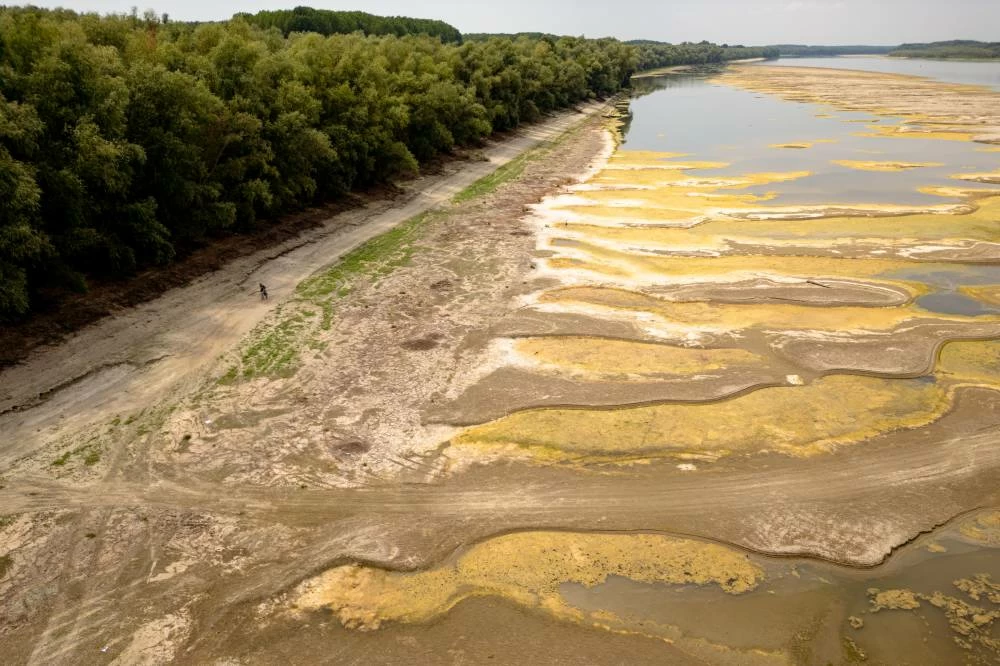
Hungary, Serbia and Romania introduce emergency measures as drought and extreme heat threaten power generation and strain electricity supplies
Budapest: Governments across Central and Eastern Europe are taking emergency steps to conserve electricity and avert potential energy shortages as record-low water levels on the Danube River disrupt power generation and threaten critical infrastructure.
Persistent drought and successive heatwaves have reduced water levels along one of Europe’s most important rivers to historic lows, placing pressure on nuclear, hydroelectric and other energy facilities that depend on the Danube.
In Budapest, water levels on the river fell to around 10 centimetres, well below the previous record low of 33 centimetres recorded in 2018.
With no significant rainfall forecast and temperatures expected to exceed 38°C in the coming days, authorities do not expect water levels to recover soon.
Hungary’s nuclear plant near shutdown
The situation has pushed Hungary’s only nuclear power station, the four-reactor Paks Nuclear Power Plant, to the brink of a complete shutdown for the first time in its 44-year history.
The facility relies on Danube water for reactor cooling and was producing just 240 megawatts on Monday compared with its usual output of around 2,000 megawatts.
Hungarian Prime Minister Péter Magyar said engineers had managed to keep the plant’s last operating turbine running temporarily, delaying what had been expected to be a full shutdown over the weekend.
Located about 90 kilometres south of Budapest, the Paks plant generates nearly half of Hungary’s electricity production and supplies about one-third of national electricity consumption.
To offset reduced output, Hungary has increased electricity imports from neighbouring countries and relied more heavily on renewable energy sources.
The government has also asked major industrial users and households to reduce power consumption, particularly during peak demand hours between 5 p.m. and 10 p.m.
Additional measures include restrictions on electric freight train operations during peak periods, a move expected to save between 70 and 90 megawatt-hours of electricity per day.
A decree issued over the weekend also allows authorities to make energy-saving measures mandatory for large industrial and commercial consumers if needed.
According to Magyar, the conservation campaign reduced electricity demand by around 700 megawatts on Sunday.
Serbia and Romania also affected
The crisis is extending beyond Hungary.
In Serbia, record-low Danube levels have reduced output at the country’s main hydroelectric facility to just 20% of capacity, prompting Prime Minister Djuro Macut to convene an emergency meeting focused on national energy security.
Macut called on residents to reduce the use of high-consumption appliances such as air conditioners, describing the situation as “serious and demanding.”
Serbian President Aleksandar Vucic warned that water levels could soon become too low for normal river transport operations. While cargo vessels are still navigating the Danube, ships are currently operating with only half their usual loads.
Romania is facing similar challenges.
Authorities there said Danube water flow has fallen to approximately 1,500 cubic metres per second, less than one-third of the river’s average flow in July.
As a precautionary measure, officials have shut down one reactor unit at the Cernavoda Nuclear Power Plant, with additional reductions in output planned. The facility is currently operating at roughly half of its normal capacity.
Growing pressure from heat and drought
The combination of prolonged drought, extreme heat and rising electricity demand is increasing pressure on power systems across the region.
As temperatures soar, demand for cooling and water consumption continues to rise at the same time that river-dependent energy production is being constrained.
Authorities across affected countries are closely monitoring conditions, with further conservation measures likely if drought conditions persist and Danube water levels continue to decline.