
Everybody carries a smartphone, conferences occur on monitors, automobiles are quicker than ever, plane attach continents in hours. But governments proceed spending billions on railways. Why?
Historical past gives the solution. In 1869, the finishing touch of The united states’s first transcontinental railroad decreased the adventure between New York and San Francisco from six months to a couple of week, remodeling far-off areas right into a unmarried financial system. India tells the similar tale at a special scale: these days, its railways raise round 7 billion passengers and greater than 1 billion tonnes of freight once a year. Throughout continents and centuries, railways have achieved the similar factor: they flip geography into financial integration.
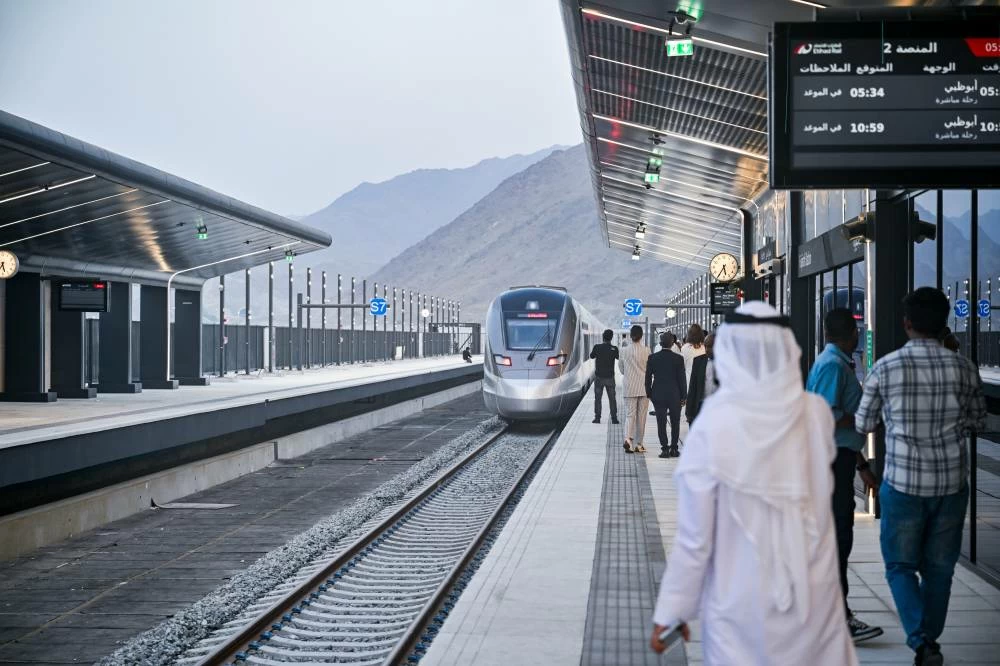
Closing week (June 30, 2026), the UAE started writing its personal bankruptcy. The inaugural Etihad Rail passenger teach left Fujairah at 5:34 a.m. on June 30 and arrived in Abu Dhabi one hour and forty-five mins later. Greater than 10,000 tickets have been offered ahead of the primary departure. A rustic that already instructions probably the most global’s busiest aviation networks, that leads in virtual executive and smart-city infrastructure, had simply laid 900 kilometres of metal around the barren region. In 2026, that felt value working out. What makes the UAE’s railway particularly attention-grabbing is that the primary passenger teach used to be now not the start of the tale.
Freight operations started years ahead of the passenger release, connecting Khalifa Port, Jebel Ali, Fujairah and business centres around the seven emirates into one logistics hall. Every freight teach gets rid of more or less 300 heavy vehicles from the roads, infrastructure designed to make seven emirates function extra like a unmarried market. Fujairah, the UAE’s number one deep water port at the Gulf of Oman, sits out of doors the Strait of Hormuz, making it the herbal jap anchor of the railway and a strategic gateway to world industry.
That technique turned into visual previous this yr. Right through the regional disruption, freight trains transported 459,000 tonnes of products and just about 8,000 boxes in simply 9 days whilst maritime routes confronted serious force. The railway quietly did what resilient infrastructure is meant to do: it saved very important items transferring.
Glance nearer and the image turns into much more attention-grabbing. Underneath the railway runs any other nationwide artery: the Habshan–Fujairah pipeline, finished in 2012, which carries round 1.8 million barrels of crude oil an afternoon without delay to the Gulf of Oman, bypassing the Strait of Hormuz underground. Above it, the railway follows the similar strategic route, wearing freight to the similar coast. One strikes power underneath the outside, the opposite strikes trade above it. In combination they disclose a development in how the UAE builds infrastructure: each visual community is bolstered by way of any other, giving the rustic a couple of strategy to keep attached when the most obvious course comes beneath force.
The velocity of execution tells its personal tale. Introduced in 2021 as a part of the Tasks of the 50, the passenger community entered carrier in not up to 5 years. It required 593 bridges and crossings, 9 tunnels and a fleet of 13 passenger trains able to travelling at 200 kilometres in keeping with hour. The adventure from Abu Dhabi to Dubai now takes simply 57 mins, Abu Dhabi to Fujairah one hour and forty-five mins. In many nations, 5 years is sufficient to entire the making plans procedure; within the UAE, it used to be sufficient to construct the railway.
And the community is already increasing. Hafeet Rail will attach the UAE with Oman thru Sohar, and a high-speed line between Abu Dhabi and Dubai will cut back trip time to round thirty mins. Through 2030, the community objectives to hold 36.5 million passengers and 60 million tonnes of freight every year, contributing an estimated AED 145 billion to the financial system over the following fifty years.
Railways have by no means been with regards to trains. They shorten distances, attach markets and reshape economies. The UAE already mastered the ocean thru its ports and the air thru its airways. Metal rails have attached towns for just about two centuries. The UAE simply finished any other layer of a device designed to stay transferring when the arena stops.
(Naoufer Ramoul is a senior TV presenter and manufacturer at Dubai Media Integrated, and the host of the award-winning political display Qabel lil Niqash on Dubai TV. She has labored as a presenter at Al Jazeera, Al Arabiya and Alhurra.)