For Tata, India’s third-largest automaker, Chery’s platform gives a faster strategy to release EVs.
NEW DELHI: Chinese language automakers could also be close out of India, however their electric-vehicle generation is beginning to make inroads on this planet’s third-largest automotive marketplace.
New Delhi has in large part blocked Chinese language corporations from coming into the marketplace since 2020 and now Beijing is clamping down at the export of its tech technology. But ties between the 2 international locations’ carmaking business are best rising.
Tata Motors mentioned previous in June it’s going to use Chery’s carmaking platform to fabricate top class EVs in India. The deal does not contain an fairness stake, and each corporations wired this can be a provide association with none switch of generation technology to Tata, highlighting the political sensitivities.
India ramped up scrutiny of Chinese language companies after a 2020 border conflict between the two international locations killed squaddies on either side. Whilst New Delhi and Beijing are running to enhance ties, some friction stays.
“If India wants to expand its manufacturing sector and be a bigger part of the global supply chain, partnership with China is inevitable. If Chinese companies want to be global leaders, they cannot wish away India and its economic potential,” mentioned Santosh Pai, spouse at regulation company Dentons Hyperlink Felony.
For Tata, India’s third-largest automaker, Chery’s platform gives a faster strategy to release EVs. Tata plans to in the end shift from depending on imported kits from China to creating elements in the community – a transfer noticed favourably via some Indian policymakers as a result of it could spice up Indian production.
“We are supportive of deals that lead to more local manufacturing or supply-chain shifts down the road. That is a good way to approach China,” mentioned a senior Indian executive reliable.
For Chinese language carmakers grappling with a slowdown at house and extra production capability, such offers might be the solution to boosting income with out violating Beijing’s export regulate orders.
Tata and Chery didn’t reply to requests for remark.
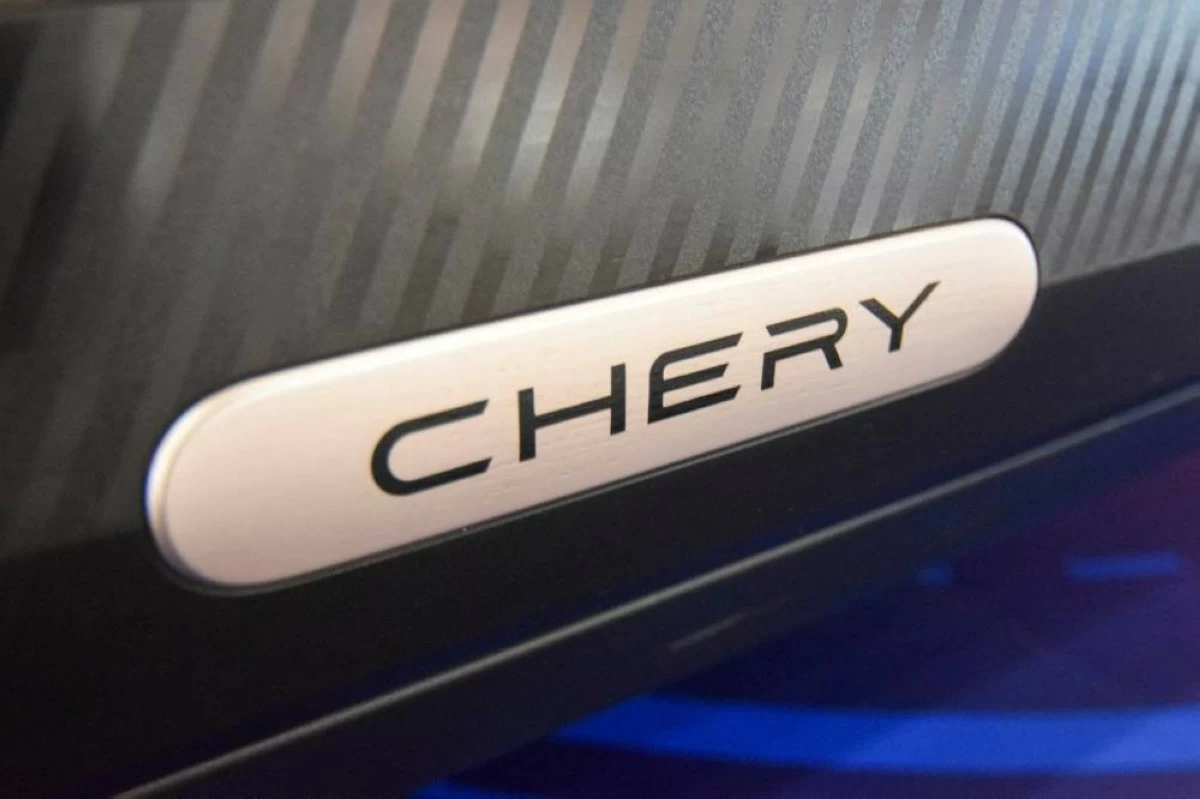
A symbol on a Chery QQ electrical car on the headquarters of Chery manufacturers Omoda and Jaecoo in Wuhu, China, April 26, 2026. REUTERSGrowing marketplace
The Tata-Chery deal displays that, regardless of its easiest efforts, India cannot stay China’s EV business totally out.
The sector’s maximum complicated EV business is more likely to proceed to make inroads into India, an enormous and nonetheless rising marketplace.
Chinese language EV makers perceive the significance of gaining a foothold in India via such provide offers, mentioned Gao Hua, a former director at China SAE and now an impartial analyst.
“If Chinese firms don’t participate, others from different countries will step in,” Gao mentioned.
Chinese language partnerships are more and more showing in sectors lengthy ruled via Jap, Korean and Eu companies, and they’re difficult the incumbents with applied sciences that many analysts say are inexpensive and quicker to deploy.
For example, Indian element maker Uno Minda has a three way partnership with China’s Inovance to fabricate EV powertrains in India – a sector the place Bosch, Nidec and Aptiv are already provide.
Battery co-operation halted
Era licensing offers between India and China began to achieve traction within the aftermath of the 2020 funding restrictions.
But it surely wasn’t all clean crusing. In 2025, Beijing’s export regulate curbs in retaliation to Trump’s price lists, compelled Indian battery maker Amara Raja to finish its licensing maintain China’s Gotion for lithium-ion cellular generation for EV batteries.
“All technical collaboration has stopped,” Amara Raja’s govt director Vikramadithya Gourineni instructed Reuters.
“The main things we were able to take away was understanding on factory and line layouts, technology roadmaps … and connecting to the vendor base,” Gourineni mentioned.
Since the licensing deal used to be now not conceivable, Amara Raja is as a substitute ramping up funding in in-house R&D and skill, he mentioned.
The corporate is now uploading apparatus, battery cells and different subject matter from Chinese language providers to satisfy its cellular production ambitions, nevertheless it struggles to get sufficient visas for engineers to return from China for operational strengthen.
Chery’s different Indian spouse
Ultimate 12 months, steel-to-cement billionaire Sajjan Jindal’s maiden carmaking project, JSW Motor, agreed to a partnership with Chery very similar to Tata’s.
Underneath the deal, JSW has secured rights to make use of and adapt more than one Chery platforms to construct a variety of hybrids and EVs for India, resources acquainted with the plans instructed Reuters. This comes to an in advance fee of about 20 billion rupees ($209 million) plus royalties, one of the vital folks added.
JSW, which is making an investment $3 billion within the project, is focused on gross sales of 300,000 automobiles via 2030, the resources mentioned.
The preliminary automobiles will in large part come as imported kits from Chery with JSW step by step construction out an Indian provide chain and scaling up automotive manufacturing at its manufacturing facility in western India, they added.
JSW Motor and Chery didn’t reply to requests for remark.
“This highlights the importance of nuanced approaches. Cutting ties is not always the best option,” Gao mentioned.