

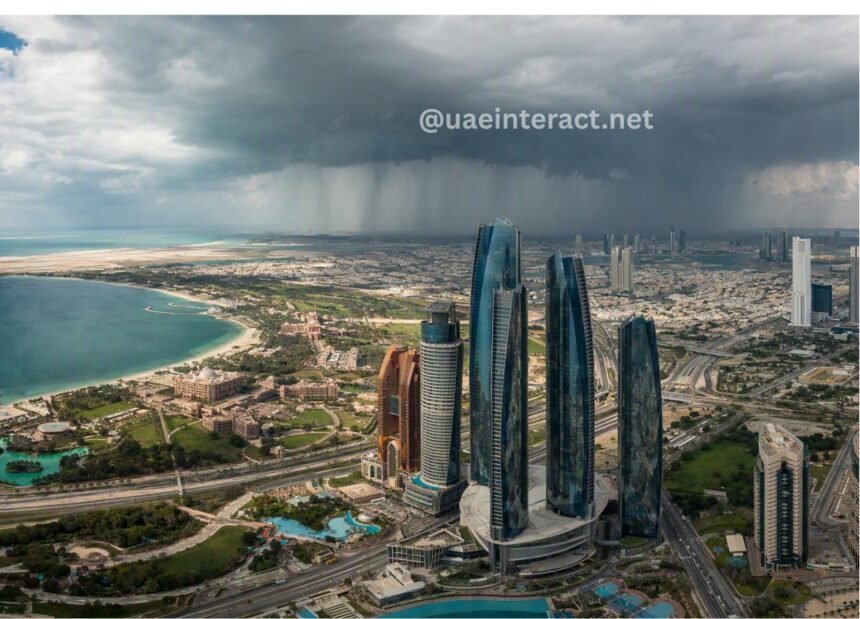
Weather warnings issued across Abu Dhabi on Friday left many residents in the capital confused, as thunderstorms, rain and dust battered inland districts while downtown areas, including the Corniche, experienced nothing more than the season’s usual humidity and hazy skies.
The National Centre of Meteorology has since clarified the gap, saying the disturbance was concentrated over the emirate’s interior and southern belt rather than Abu Dhabi city itself.
Maryam Al Shehhi, the centre’s head of marine meteorology, said summer low-pressure systems typically build over the east and southeast, forming near Al Ain and the Hajar Mountains before intensifying.
According to Al Shehhi, such systems are common at ground level during summer but rarely stretch into the upper atmosphere. When both layers align, intense heat, humidity and cooler air aloft combine to destabilise the atmosphere, fuelling fast-forming storm clouds.
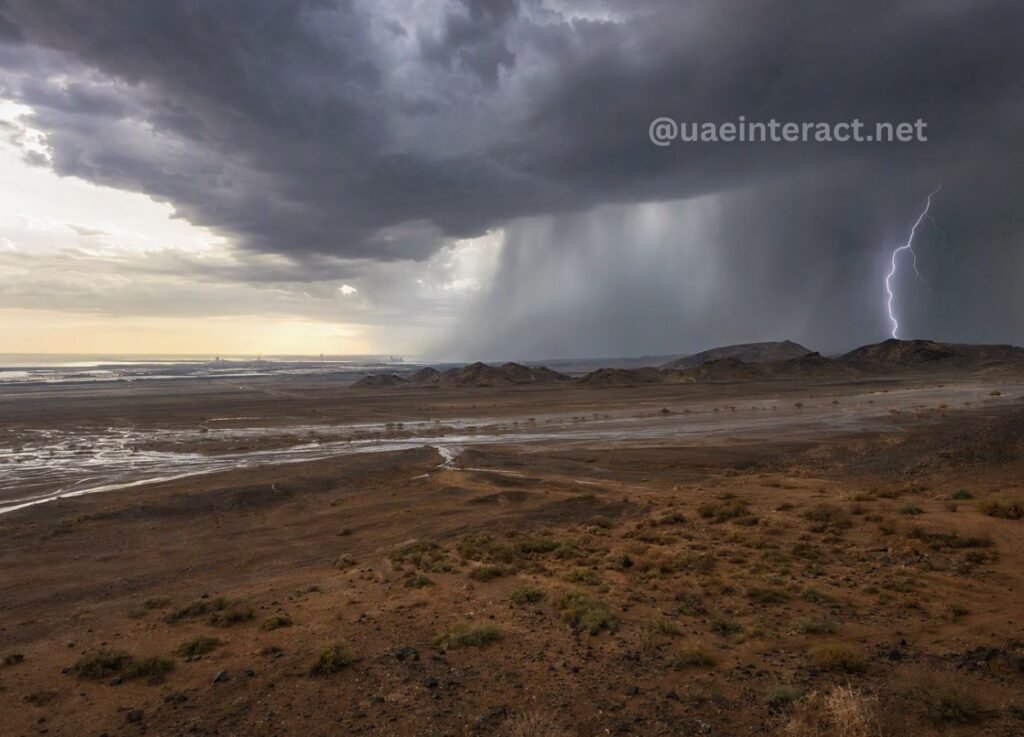
Because the effect depends on this rare vertical alignment, the resulting rain tends to stay highly localised, explaining why Mohamed bin Zayed City, Shakhbout City, Al Shamkha and other inland pockets can flood with rain while the coastal capital stays dry.
The storms often bring dust with them. As rain falls, downdrafts push air downward before it spreads outward at ground level, kicking up dust and creating sudden hazy bursts around active cloud systems.
Elevated terrain in the eastern mountains heats up faster, triggering earlier storm activity there, while flatter inland areas such as Al Ain need longer for the ground to warm enough to trigger rising air, often delaying rainfall until evening.
NCM forecasts suggest the unsettled pattern will persist through the coming week, with convective clouds and rain expected over eastern, southern and western areas, alongside winds gusting up to 50km/h and blowing dust.
Despite the frequent downpours, Al Shehhi said summer rain is too brief to green the desert, since sustained light rainfall, not sudden bursts, is what nourishes vegetation. Some inland and eastern areas have seen near-daily rain since mid-July, though humidity typically returns quickly once showers pass.
On temperatures, Al Shehhi said the UAE is unlikely to see the 50°C mark again this summer, with readings expected to hover between 46°C and 49°C before a steadier decline begins in October.